
Margaret Nicholson Distinguished Service Award: Donna Ross
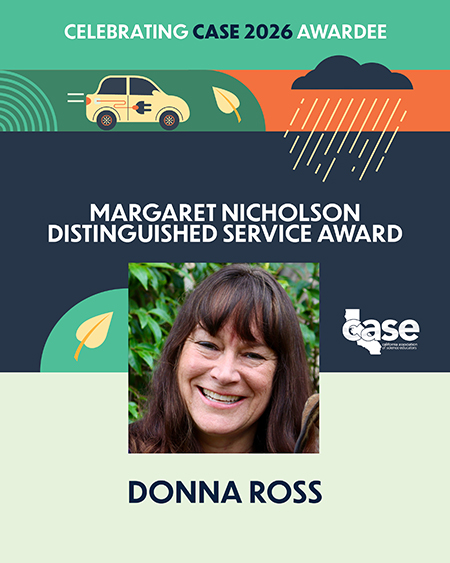
Meet Donna Ross
Receiving this award is deeply meaningful to me because it represents not only a personal honor, but also a celebration of the people and purposes that have shaped my professional life. I am especially proud to have had the opportunity to serve on the Board of Directors on two separate occasions. Serving in that role allowed me to contribute to an organization I value deeply and to learn from colleagues who bring extraordinary commitment, energy, and vision to science education.
What I treasure most is being part of a community of dedicated, hard-working people who continually strive to improve scientific understanding and inspire a lasting passion for science. This work reminds me that science education is not simply about sharing knowledge. It is about helping people ask better questions, think critically, engage with evidence, and make decisions thoughtfully. I also recognize the role of organizations in this process as they bring us together to learn, share research, and collaborate on best practices.
I have known and admired numerous previous recipients of this award, and I am genuinely humbled to now be counted among such a remarkable group of people. Their contributions have set a high standard for service, leadership, and impact. I receive the recognition with gratitude.
This award reflects the many colleagues, mentors, and students who have made my journey so rewarding. I am honored to accept it and even more honored to continue supporting the important work we share.
What advice would you give to someone just starting out in science education?
My advice to early career science educators is to share your love of science. Your curiosity and enthusiasm are contagious. They can make scientific ideas feel relevant, meaningful, and alive. Also share your love of teaching. It is a marvelous profession and others should understand the joy it can create.
At the same time, remember that you cannot know everything. And that is okay! When you tell students, “I don’t know, but I’m going to find out,” you model intellectual honesty, curiosity, and lifelong learning. Follow through and find the answer; it becomes a valuable learning experience for everyone.
I also encourage new science educators to stay connected to the scientific community. Seek out research opportunities for teachers, volunteer with scientific organizations, attend lectures, and maintain relationships with friends and colleagues who are scientists. These connections help you stay current and maintain your own excitement about science.
Finally, become involved with CASE and other science education organizations. We learn so much from one another, and professional communities provide support, inspiration, collaboration, and a sense of belonging.
For those of you reading this, you may very well be the future leaders in the field of science education!
What excites you most about the future of science education?
I am optimistic about the future. New scientific discoveries are made every day and our understanding of the natural world continues to increase.
I have been a science teacher and science teacher educator long enough to have experienced shifting attitudes towards the work we do. Sometimes we have more support; sometimes we have less. But throughout my career, I have never lost sight of the wonder of working alongside amazing students, teachers, and science teacher educators, with whom I can continue to be inspired regardless of the challenges we face. In fact, when we experience professional challenges outside our control, perhaps there is no more important time to stay positive, focused, and forward looking.
We make a difference every day when we teach, when we help others understand the role science plays in our everyday lives, and when we support organizations like CASE to fight on our behalf. Each of us has an important role in increasing scientific literacy across our communities.
What is your favorite book/podcast right now?
This summer I read Injustice by Pulitzer Prize–winning reporters Carol Leonnig and Aaron C. Davis about how the Department of Justice has changed over the past decade. I couldn’t put it down because it was incredibly thought-provoking and fascinating. (I also enjoy the comedy/science podcast Ologies).
Do you have a hidden talent? Tell us about it!
When I was fostering rescue dogs over the pandemic, I found that I am good with dogs who have had very challenging backgrounds. Patience, kindness, and consistency aren’t just good approaches when teaching kindergarten, they also work wonders with traumatized dogs!
Upcoming Conferences
- 2026 Conference
November 6-8, 2026
Sacramento, CA
Sacramento Convention Center - 2027 Conference
October 8-10, 2027
Pasadena, CA
Pasadena Convention Center

Quick Links
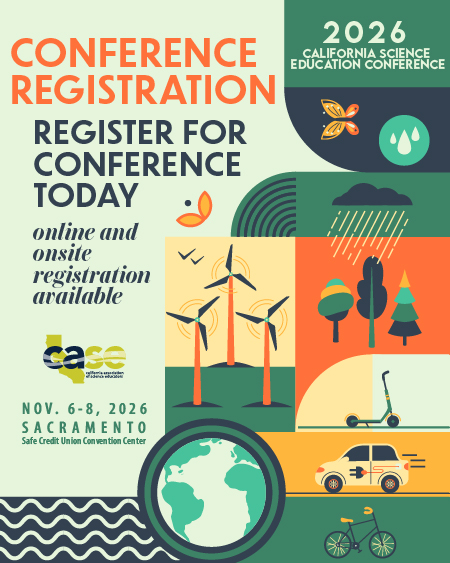
Conference Registration Open
- Full Price (10/1 through Conference)
- If you have already registered and need to purchase ELAD or Conference Add-Ons (BEGIN HERE)